

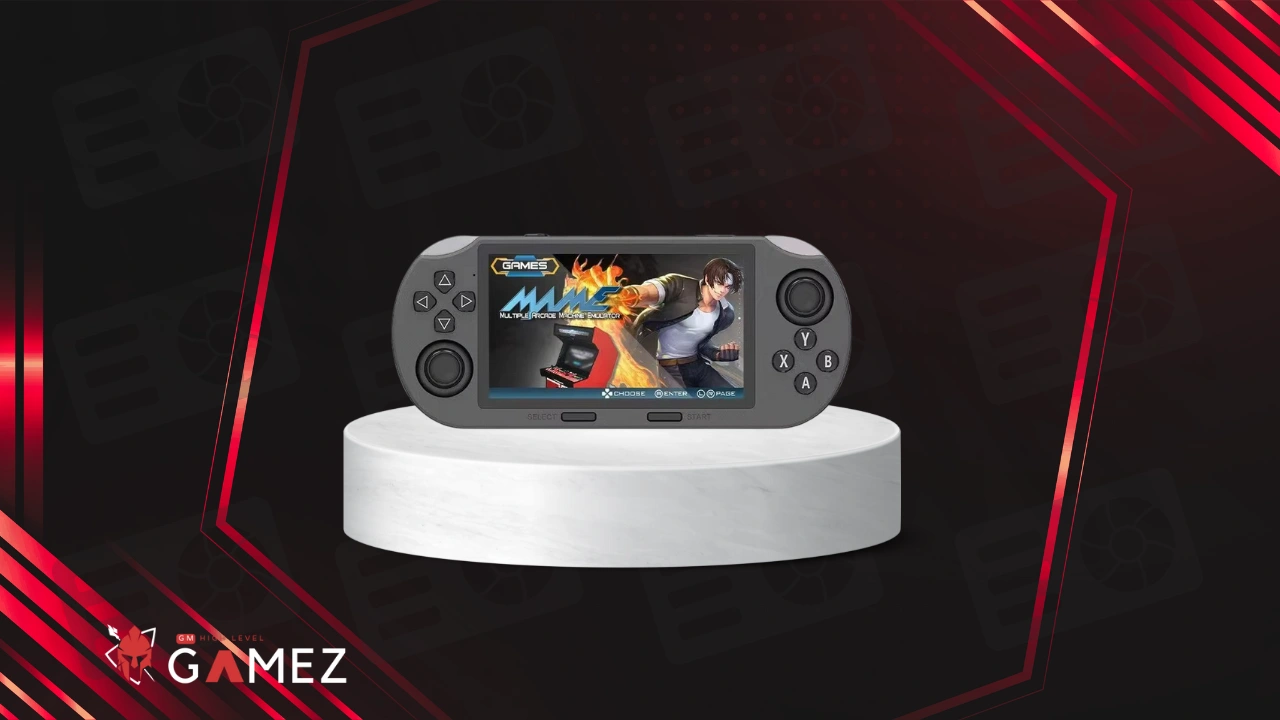
The SF3000 retro handheld console brings nostalgic gaming straight to your pocket with stunning visuals and massive game compatibility that’ll blow your mind.
In this review I will analyze all aspects of the SF3000 in terms of performance specifications and various uses.
✅ You can buy SF3000 from Aliexpress buy following this Link.
What Is SF3000 Console?
Let me tell you straight up – SF3000 isn’t just another cheap knockoff handheld that you’ll toss in a drawer after two weeks and forget about forever like that gym membership
This bad boy is a legitimate retro gaming powerhouse that runs on Linux OS and packs a gorgeous 4.5-inch IPS screen with 854×480 resolution which honestly looks way better than it has any right to at this price point
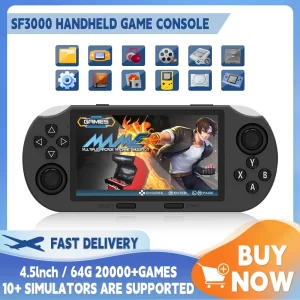
The SF3000 belongs to that sweet category of portable emulation devices that have absolutely exploded in popularity over the last few years because honestly who doesn’t want to replay Pokemon FireRed on the bus or crush some Super Mario World levels during lunch breaks at work
What makes this device stand out from the crowd though is its balance between affordability and actual usable features – you’re not getting some janky piece of plastic with terrible controls and a screen that looks like it was salvaged from a 2005 flip phone
| Core Specifications | Details |
|---|---|
| Display Size | 4.5 inches diagonal 📺 |
| Screen Resolution | 854×480 pixels IPS |
| Battery Capacity | 3000mAh rechargeable |
| Operating System | Linux-based custom firmware |
| Primary Function | Multi-system emulation console |
| Portability Factor | Pocket-sized design ✨ |
The device essentially acts as a time machine that lets you revisit gaming’s golden age from the NES era all the way up through PlayStation 1 and even some Nintendo 64 titles depending on how demanding they are
Read also: KINHANK K36 Review: Still Worth Buying in 2025?
Who Developed the SF3000?
Here’s where things get a bit murky because the SF3000 doesn’t come from some massive gaming corporation with billion-dollar marketing budgets and celebrity endorsements
Instead this handheld emerged from the thriving Chinese retro gaming scene where dozens of manufacturers are constantly innovating and releasing new devices that push the boundaries of what’s possible in affordable emulation hardware
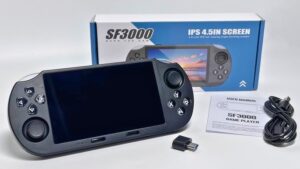
The exact company behind the SF3000 operates in that interesting gray area of gaming hardware manufacturing where brand names matter less than the actual product quality and community support
What I can tell you is that whoever designed this thing clearly understands what retro gamers actually want because they nailed so many details that other manufacturers completely botch
| Developer Profile | Information |
|---|---|
| Origin Region | China 🇨🇳 |
| Market Position | Mid-range budget segment |
| Target Audience | Retro gaming enthusiasts |
| Distribution Model | Online retailers primarily |
| Community Support | Active forums and Discord groups |
The development philosophy seems focused on delivering maximum value without cutting corners on the stuff that actually matters like screen quality and button feel
Read also: ANBERNIC RG35XX H Review
Manufacturer and Overview
The SF3000 comes from that fascinating ecosystem of Shenzhen-based electronics manufacturers who have basically perfected the art of creating solid gaming handhelds that punch way above their weight class
These aren’t the sketchy fly-by-night operations that disappear after selling you garbage – we’re talking about established factories with actual quality control and distribution networks
The manufacturing standards have improved dramatically over the past few years as competition has forced everyone to step up their game or get left behind in the dust
Design and Build Quality
I gotta say the SF3000 feels surprisingly solid when you first pick it up and doesn’t give you that immediate “this is gonna break” vibe that cheaper handhelds often do
The shell is made from decent ABS plastic that has a slight texture to it which helps with grip and prevents it from feeling too cheap or toylike in your hands
Weight distribution is actually pretty well balanced which matters way more than most people realize when you’re holding something for extended gaming sessions
| Build Specifications | Rating/Details |
|---|---|
| Material Quality | ⭐⭐⭐⭐ Solid ABS plastic |
| Button Feel | ⭐⭐⭐⭐ Tactile and responsive |
| D-Pad Quality | ⭐⭐⭐⭐⭐ Excellent for retro games |
| Durability Rating | ⭐⭐⭐⭐ Should survive normal use |
| Overall Comfort | ⭐⭐⭐⭐ Ergonomic enough |
The button layout follows that classic GameBoy Advance SP inspiration which honestly makes perfect sense for a device like this because that form factor has been proven over decades
Face buttons have that satisfying click without being too loud or mushy and the D-pad is actually legitimately good which is crucial for retro gaming where precise inputs matter
Shoulder buttons sit at a comfortable angle though they’re not quite as premium-feeling as the face buttons but hey at this price point I’m not complaining too loudly about minor compromises
Read also: BATLEXP G350 Review: Still Worth Buying in 2025?
Display and Visual Experience
Now this is where the SF3000 really starts to shine because that 4.5-inch IPS display is genuinely impressive for what you’re paying
The 854×480 resolution might not sound mind-blowing on paper but for retro games that were designed for way lower resolutions it’s actually perfect and provides crisp clean visuals
IPS technology means you get decent viewing angles without major color shifting which is super important when you’re gaming in different positions or showing friends what you’re playing
| Display Features | Performance |
|---|---|
| Screen Type | IPS LCD panel 🌈 |
| Native Resolution | 854×480 (FWVGA) |
| Aspect Ratio | 16:9 widescreen |
| Brightness Levels | 5 adjustable settings |
| Color Reproduction | Vibrant and accurate ✨ |
| Viewing Angles | Wide (IPS advantage) |
Colors pop beautifully without being oversaturated and blacks are reasonably deep though obviously not OLED-level since that would double the price instantly
The screen size hits that sweet spot where it’s big enough to actually see what’s happening without straining your eyes but small enough to keep the device pocketable
Pixel density is more than adequate for the types of games you’ll be playing and honestly most retro titles look better on this than they did on original hardware
Game Library and Compatibility
Here’s where things get absolutely wild because the SF3000 can theoretically play thousands upon thousands of games from multiple classic systems
The Linux-based OS supports a huge range of emulators right out of the box which means you’re not limited to just one console generation
| Supported Systems | Compatibility Level |
|---|---|
| NES/Famicom | ⭐⭐⭐⭐⭐ Perfect |
| SNES/Super Famicom | ⭐⭐⭐⭐⭐ Flawless |
| Sega Genesis/Mega Drive | ⭐⭐⭐⭐⭐ Excellent |
| Game Boy/Color/Advance | ⭐⭐⭐⭐⭐ Native feel |
| PlayStation 1 | ⭐⭐⭐⭐ Most games great |
| Nintendo 64 | ⭐⭐⭐ Hit or miss |
| Arcade Games | ⭐⭐⭐⭐ Good selection works |
The device handles 8-bit and 16-bit systems like an absolute champion with zero slowdown or audio crackling which is exactly what you want from dedicated retro hardware
PS1 emulation is surprisingly solid for a device in this price bracket though you’ll want to stick with 2D games or less demanding 3D titles for the best experience
N64 is where you start hitting the performance ceiling – some games run okay but don’t expect GoldenEye 007 to be perfectly playable because the hardware just isn’t quite there yet
Read also: MIYOO Mini Plus Review
Performance and Emulation Quality
The chipset inside the SF3000 isn’t going to win any performance awards against modern smartphones but it’s perfectly matched to what this device is designed to do
Everything up through the PS1 era runs smoothly without stuttering or frame drops assuming you’re using properly optimized emulator settings
| Performance Metrics | Real-World Experience |
|---|---|
| Boot Time | 15-20 seconds to menu ⏱️ |
| Game Load Speed | 3-5 seconds average |
| Frame Rate (16-bit) | Locked 60fps |
| Frame Rate (PS1) | 30-60fps depending on game |
| System Stability | Very reliable |
| Heat Generation | Minimal warming 🌡️ |
The emulators included are pre-configured which is awesome for people who don’t want to spend hours tweaking settings just to play some Mega Man X
Save states work flawlessly which is honestly one of the best features of emulation because you can save literally anywhere instead of hunting for save points
Fast forward functionality lets you speed through grinding or boring sections which basically transforms how you can experience old RPGs
Controls and User Experience
Button responsiveness is crucial for retro gaming and I’m happy to report the SF3000 nails this aspect better than many competitors
The D-pad uses individual switches rather than a membrane which gives it that satisfying tactile feedback that’s essential for precise platforming
| Control Elements | Quality Assessment |
|---|---|
| D-Pad Type | Individual buttons 🎮 |
| Face Buttons | 4 buttons (A/B/X/Y) |
| Shoulder Buttons | L1/R1 triggers |
| Start/Select | Dedicated buttons |
| Menu Button | Quick access ⚙️ |
| Overall Feel | ⭐⭐⭐⭐ Responsive |
Menu navigation is intuitive enough that you won’t need to read a manual or watch YouTube tutorials just to figure out how to launch games
The UI isn’t winning any design awards but it’s functional and gets out of your way which is honestly all that matters when you just want to play games
Button mapping is customizable per emulator which means you can set up controls exactly how you prefer for different game types
Sound and Audio Quality
The built-in speaker isn’t going to replace your fancy headphones but it’s surprisingly decent for such a small device
Volume gets loud enough to hear clearly in most environments without distorting though you’ll probably still want headphones for crowded places
| Audio Specifications | Performance |
|---|---|
| Speaker Type | Single mono speaker 🔈 |
| Maximum Volume | Adequately loud |
| Audio Quality | Clear midrange |
| Bass Response | Limited (expected) |
| Headphone Jack | 3.5mm standard |
| Headphone Quality | ⭐⭐⭐⭐ Great output |
The 3.5mm headphone jack outputs really clean audio and honestly sounds way better than the internal speaker which makes sense given physics and size constraints
Retro game soundtracks and sound effects come through crisp and clear without annoying buzzing or interference that plagues cheaper handhelds
Volume controls are easily accessible during gameplay so you can adjust on the fly without pausing or digging through menus
Read also: Trimui Smart Pro Review
Connectivity and Ports
Port selection covers the basics without overwhelming you with options you’ll never use anyway
| Available Connections | Specifications |
|---|---|
| Charging Port | USB-C (thank goodness) 🔋 |
| Audio Output | 3.5mm headphone jack |
| Video Output | Mini HDMI (some models) |
| Expandable Storage | MicroSD card slot 💾 |
| USB Data Transfer | Yes for adding games |
USB-C charging is a huge win because it means you can use the same cable as your phone and other modern devices instead of carrying around proprietary chargers
The microSD card slot is essential because the internal storage fills up fast when you’re loading up dozens of PS1 games that can be hundreds of megabytes each
Some versions include mini HDMI output which lets you connect to a TV though honestly if you’re buying this device you probably want portable gaming not another console for your entertainment center
Battery Life and Power Consumption
That 3000mAh battery sounds modest on paper but remember this isn’t trying to push high-end 3D graphics or power a massive high-resolution display
| Battery Performance | Real-World Results |
|---|---|
| Capacity | 3000mAh lithium battery ⚡ |
| Average Runtime | 4-6 hours depending on use |
| Charging Time | 2-3 hours to full |
| Standby Time | Several days |
| Power Efficiency | Optimized for emulation |
Real-world battery life lands somewhere between 4 to 6 hours depending on screen brightness and which systems you’re emulating
PS1 games drain the battery noticeably faster than SNES titles because of the extra processing power required which makes sense when you think about it
Charging via USB-C means you can top up using portable battery banks which is clutch for long flights or road trips where you want marathon gaming sessions
Storage and Customization Options
Internal storage varies by model but you’ll definitely want to grab a microSD card regardless because pre-loaded games only take you so far
The Linux-based system is surprisingly open to customization if you’re willing to dig into forums and Discord communities where enthusiasts share custom firmware and optimized emulator builds
| Storage Options | Details |
|---|---|
| Internal Storage | Varies (typically 8-16GB) 📦 |
| MicroSD Support | Up to 256GB officially |
| Card Speed Needed | Class 10 recommended |
| File System | FAT32 for compatibility |
| Adding Games | Drag-and-drop via USB |
Adding your own games is straightforward through USB connection where you just drag ROM files into the appropriate folders like copying music to an old MP3 player
You can customize the UI themes if the default look doesn’t do it for you though honestly most people just want to get to the games
Save states and save files are stored separately which means you can back them up easily if you’re worried about losing progress
Multiplayer Features
Local multiplayer isn’t really a focus here since the device is designed primarily for solo portable gaming experiences
| Multiplayer Capability | Status |
|---|---|
| Local Co-op | Limited/Not supported ❌ |
| Bluetooth Controllers | Not available |
| Online Features | None |
| Pass-and-play | Manual only 🎮 |
You could technically play turn-based games with a friend by passing the device back and forth but that’s about the extent of multiplayer functionality
The lack of wireless controller support means you’re not setting up Super Smash Bros tournaments on this thing but honestly that’s not what it’s built for anyway
Read also: BOYHOM R36S Aliexpress Review
Pros & Cons of SF3000
Let me break down the good the bad and the “well it’s complicated” aspects of this handheld based on extensive hands-on experience
Is SF3000 Worth Buying in 2026?
Look I’m gonna level with you – the SF3000 absolutely delivers on its core promise of being an affordable portable retro gaming machine that doesn’t completely suck
The price-to-performance ratio is genuinely impressive especially when you compare it to official retro compilations that give you like 20 games for similar money
For PS1 gaming it’s solid enough that most titles run well though you’ll want to manage expectations and stick with less demanding games for the smoothest experience
However if N64 is your main retro gaming passion or you need bleeding-edge emulation performance for more demanding systems then you should probably look at pricier options with beefier processors
| User Type | Recommendation |
|---|---|
| Casual Retro Fan | ⭐⭐⭐⭐⭐ Perfect fit |
| Serious Collector | ⭐⭐⭐ Decent backup device |
| First-time Buyer | ⭐⭐⭐⭐⭐ Great starting point |
| N64 Enthusiast | ⭐⭐ Look elsewhere |
| Budget Conscious | ⭐⭐⭐⭐⭐ Excellent value |
| Tech Tinkerer | ⭐⭐⭐⭐ Good customization |
The device hits that sweet spot where it’s cheap enough that you won’t cry if it gets damaged but good enough that you’ll actually enjoy using it regularly
In 2026 there are definitely competitors with slightly better specs or features but the SF3000 remains a solid choice especially if you can snag it on sale

✅ You can buy SF3000 from Aliexpress buy following this Link.
FAQs About SF3000
Absolutely yes – Game Boy Game Boy Color and Game Boy Advance emulation is basically flawless with perfect performance and the screen size works great for these titles
Expect 4-6 hours of real gaming time depending on brightness settings and which systems you’re running – lighter 2D games stretch battery further than PS1 titles
